
How to Avoid Lease Return Damage Charges Before Turning in Your Car
The end of a car lease can feel like a finish line - but for many drivers across Nassau County and Long Island, it turns into an unexpected financial headache. Dealers routinely charge hundreds, sometimes thousands, of dollars for damage they classify as beyond "normal wear and tear" when a vehicle is returned. Scratches on the bumper, a small dent on a door panel, a scuffed alloy wheel, a chipped windshield - each one becomes a line item on an invoice you never planned for. If you are approaching your lease return date and want to protect your wallet, understanding how to avoid lease return damage charges is one of the smartest moves you can make right now.
The good news is that most of the damage dealers charge for is entirely repairable before you hand the keys back. Getting those repairs done on your own terms - at a shop you choose, at a price that is far more reasonable than dealer-assessed fees - is the strategy that savvy lessees in Garden City Park, Mineola, Westbury, Roslyn, Great Neck, and communities throughout Long Island have relied on for decades. This guide walks you through exactly what to look for, what to fix, and how to approach your lease return with confidence.
Understanding What Dealers Classify as Excess Wear and Tear
Every lease agreement includes a wear and tear policy, and it is worth reading yours carefully before the inspection day arrives. In general, leasing companies distinguish between normal wear and tear - the kind of gradual aging that happens to any car driven regularly - and excess or abnormal damage that goes beyond what they consider acceptable. The line between the two is not always obvious, and dealers and their inspection agents tend to interpret it in ways that generate charges.
Normal wear and tear typically includes very minor surface scuffs that do not break through the paint, light interior wear consistent with daily use, and minimal tire wear within acceptable tread depth thresholds. Excess wear, by contrast, includes items like these:
- Dents and dings larger than a small coin diameter on body panels
- Scratches that cut through the clear coat or into the base paint
- Chips, cracks, or pitting on the windshield or other glass
- Scuffed, curbed, or gouged alloy wheels
- Bumper scrapes or cracks from parking lot contact
- Stains, tears, or burns on interior upholstery
- Missing or broken trim pieces
- Tires below the minimum tread depth required in your agreement
The critical point is that dealers do not repair these items at competitive market rates. Their affiliated repair vendors typically charge premium prices, and those costs pass directly to you. Having repairs completed independently before the inspection - at a shop with the skills and equipment to do the job properly - almost always costs less than the fees a dealer will assess after the fact. It also gives you control over the quality of the work, which matters for your peace of mind regardless of the financial angle.
Doing a Thorough Pre-Return Inspection on Your Own
One of the most practical things you can do before your lease ends is walk around the vehicle yourself with fresh eyes, as if you were the inspector. Many lessees are so accustomed to their car that they stop noticing small flaws that developed over the lease term. A deliberate, methodical self-inspection changes that.
Start on a bright day, ideally in natural light rather than under a garage ceiling, and work your way around every panel. Crouch down and look along the length of each door and quarter panel from a low angle - this reveals dents, ripples, and paint irregularities that are invisible when you look straight on. Check the front and rear bumper covers closely, since those are the most common sites of parking lot damage. Inspect each wheel for curb rash, and look at the windshield from multiple angles to catch chips or cracks you may have dismissed as minor.
Inside the car, check the seats and carpets for stains and tears, the headliner for marks, and all trim pieces to confirm they are intact and secure. Pop the hood as well - most lease return inspections focus on the exterior and interior, but arriving in a vehicle that looks well maintained inside and out signals care throughout the lease term.
As you go, take dated photographs of every panel, every wheel, the glass, and the interior. This documentation is not just useful for your own awareness - it gives you a reference point if there is ever a dispute about when damage occurred.
Many leasing companies also offer a pre-inspection service a few weeks before the official return date. Taking advantage of this walk-through, if your lessor offers it, can surface issues you missed and give you a clearer idea of what charges you might face without repairs. Use it as a planning tool, not a final verdict.
Getting Repairs Done Before the Return Date - and Why It Pays Off
Once you have catalogued the damage on your vehicle, the next step is deciding what to repair. The general principle is straightforward: if the cost of professional repair is less than the fee the dealer would charge, it makes sense to fix it. For most categories of common lease-end damage, independent repair is the more economical path.
Small dents and dings that have not broken the paint surface are prime candidates for paintless dent repair, often called PDR. This technique uses specialized tools to massage the metal back to its original shape from behind the panel, with no filler and no repainting required. The result is a finish that looks factory-new, and the process is typically faster and less expensive than conventional body repair. Alpha Collision offers paintless dent repair, including mobile PDR, so drivers across Nassau County can address those frustrating parking lot dings efficiently.
Deeper dents, creases, or any damage that has broken the paint surface require conventional body repair followed by refinishing. This is where paint quality matters enormously. A reputable shop will use computerized color matching technology to blend the repaired area seamlessly with the surrounding panels - avoiding that telltale "repaired" look that can still draw scrutiny during an inspection. At Alpha Collision, technicians use computerized factory color matching along with premium paints cured in a bake booth, which produces a durable, showroom-quality result.
Alloy wheel damage is another frequent source of lease return charges. Curb rash and scrapes on wheel rims look worse than they often are, and professional wheel refinishing can restore them to a condition that passes inspection without raising concerns. Similarly, a chipped or cracked windshield should be addressed before your return date. Depending on the size and location of the chip, a repair may suffice, while larger cracks will require full replacement - but either way, handling it before the inspection is almost always less expensive than the dealer's post-return assessment.
Bumper scuffs and scrapes, which are extremely common on leased vehicles driven in busy suburban and urban areas, can often be repaired with spot refinishing rather than full replacement. An experienced body shop technician will evaluate the damage and recommend the most cost-effective approach. The goal is to bring the vehicle to a condition that meets the lease agreement's standards without spending more on repairs than the dealer would have charged in fees.
It is also worth noting that New York State law gives every driver the right to choose their own repair shop. You are never required to use a facility recommended or affiliated with your dealership or leasing company. Exercising that right means you can select a shop based on quality, trust, and fair pricing rather than convenience to the dealer.
Choosing the Right Shop for Lease Return Repairs on Long Island
Not all body shops are created equal, and the quality of lease return repairs matters. A repair that looks fine initially but begins to show problems a few months later does not help you if the inspection happens to catch it - and poor-quality work is easier to spot than many drivers realize. Choosing a shop with the right equipment, trained technicians, and a track record of quality is essential.
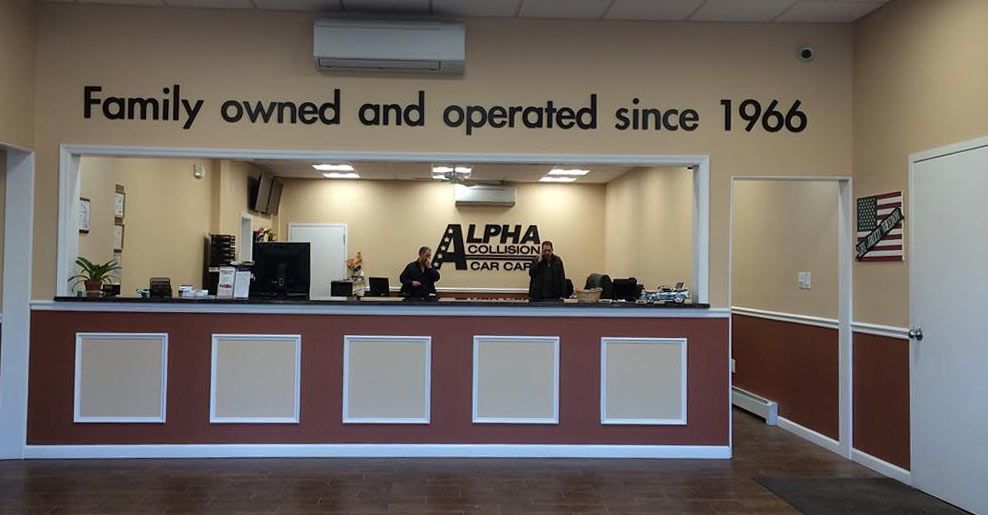
Alpha Collision and Car Care, located at 79 Herricks Rd. in Garden City Park, NY, has been serving Nassau County and Long Island drivers since 1966. Family owned and operated across three generations, the shop brings decades of hands-on expertise to every type of body and paint repair. The team includes ASE-certified professionals and factory-trained technicians, which means repairs are performed to the standards that matter when a vehicle is being inspected closely at lease return time.
What sets Alpha Collision apart for lease return repairs specifically is the combination of services available under one roof. Body work, paint refinishing, paintless dent repair, auto glass, frame work, and full mechanical service are all handled on-site. For a lessee preparing for return, this means that every item flagged during a self-inspection - from a door ding to a windshield chip to a scuffed bumper - can be addressed in a single visit to a single shop rather than coordinating across multiple facilities. The shop also offers 24/7 flatbed towing if a vehicle needs to be transported, and free estimates so drivers can understand the cost of repairs before committing.
Drivers from Garden City, Mineola, New Hyde Park, Westbury, Roslyn, Great Neck, and surrounding communities throughout Nassau County have made Alpha Collision their trusted local resource for exactly this kind of work. The shop also works with all insurance companies and communicates directly with adjusters on behalf of customers when insurance is involved, though for pre-return lease repairs many drivers choose to pay out of pocket to avoid any impact on their insurance history - which is a personal decision worth reviewing against your own policy terms.
Smart Habits That Reduce Damage Throughout Your Lease
While the focus of this article is on preparing for lease return, it is worth taking a moment to think about habits that limit damage accumulation in the first place - because the less repair work your vehicle needs at the end of a lease, the simpler and less expensive the return process becomes.
Parking thoughtfully is one of the highest-impact habits a lessee can develop. Choosing end spots in parking lots, backing into spaces when possible to protect the rear bumper, and giving extra clearance to neighboring vehicles in tight lots all reduce the frequency of minor contact damage. Tight urban streets and congested suburban parking - common realities across Nassau County - make this kind of awareness especially valuable.
Addressing small damage promptly rather than letting it accumulate is another practical strategy. A paint chip left unaddressed can develop into a rust spot over time, turning a minor cosmetic issue into a more significant repair. Similarly, a small windshield chip that is ignored can grow into a crack that requires full glass replacement. Catching these things early and handling them promptly keeps repair costs manageable throughout the lease rather than presenting a large bill at the end.
Keeping the vehicle clean also matters more than many people realize. Regular washing removes road debris, salt, and contaminants that can degrade paint over time. Interior cleanliness prevents stains from setting and keeps upholstery in condition that holds up under lease return scrutiny. These are small habits, but they add up over a two or three year lease term.
Finally, knowing your mileage situation as the lease end approaches is important. Excess mileage charges are a separate category from damage fees, but both can combine to create a significant end-of-lease bill. If you are under your mileage allowance, you have no concern there. If you are over, that is a conversation to have with your leasing company about your options.
The overarching principle is that a leased vehicle is a financial commitment that extends to the moment you hand back the keys. Treating it with that awareness from day one - and acting decisively to address issues that arise along the way - is the most reliable way to avoid a large and unwelcome bill on return day.
If your lease return date is approaching and you want a professional assessment of what repairs your vehicle may need, the team at Alpha Collision and Car Care is ready to help. With more than five decades of experience serving drivers across Long Island and Nassau County, the shop offers free estimates and the kind of honest, straightforward guidance that only comes from a family business built on lasting community relationships. Call or text (516) 294-0852 today to schedule your free lease return repair estimate, and turn in your vehicle with confidence.
SHARE THIS POST:
Author:
Alpha Collision & Car Care
Alpha Collision & Car Care provides expert auto repair, collision restoration, and maintenance services to keep your vehicle running smoothly and looking its best. With precision, quality, and customer satisfaction, we ensure your car is safe, reliable, and road-ready.
Get in touch
We're Ready To Assist You Anytime
Blog - Website Form
Search an article
Blog
Recent Articles


GET HELP WITH YOUR INSURANCE CLAIM
Reporting an insurance claim can be a major inconvenience. Call Alpha, we can make your insurance claim seamless.
Sign Up For Updates
Sign Up Now & Enjoy 10% Off Your First Service
Sign up today and receive
10% off your first service! Experience expert auto care with quality repairs and maintenance.