
Signs Your Transmission is Slipping: What to Watch for and What to Do Next
A slipping transmission is one of the clearest warnings your vehicle can send you, and it shows up in ways you can feel, hear, and sometimes even smell. The signs include gears that shift on their own, a delay when you press the accelerator, rough or jerky gear changes, unusual noises, and fluid leaking beneath the car. Catching these symptoms early and getting a proper diagnosis can be the difference between a manageable repair and a full transmission rebuild.
- Key takeaway 1: Transmission slipping feels like the engine revving without the car accelerating at the same rate.
- Key takeaway 2: Delayed shifting, rough gear engagement, and strange noises are all common warning signs.
- Key takeaway 3: Low or degraded transmission fluid is one of the frequent causes of slipping in both automatic and manual transmissions.
- Key takeaway 4: Driving on a suspected slipping transmission can turn a minor repair into a much larger one - stop driving and have the vehicle inspected.
- Key takeaway 5: A thorough diagnostic is the starting point for any honest repair estimate.
If you are driving around Garden City Park, Nassau County, or anywhere on Long Island and something about your transmission feels off, this guide walks you through every major symptom, what causes each one, and what a shop should actually do to fix it. Alpha Collision and Car Care at 79 Herricks Rd. in Garden City Park handles transmission diagnostics and repair in-house, so you are getting mechanical work and a full assessment under one roof rather than being sent somewhere else.
What Does a Slipping Transmission Actually Feel Like?
The term "slipping" can sound vague, but drivers who have experienced it describe it very specifically. The engine revs climb, sometimes sharply, but the car does not accelerate to match. It feels disconnected, like the power is going somewhere other than the wheels.
Beyond that core sensation, slipping shows up in several distinct ways depending on whether you drive an automatic or a manual. Here are the most common things drivers notice:
- Unexpected gear changes: The transmission shifts into a different gear on its own, without any input from you, often while maintaining a steady speed on a highway or main road.
- Delayed acceleration: You press the gas pedal and there is a noticeable pause before the car responds. The engine sound rises but forward motion lags behind.
- RPM spikes: The tachometer jumps higher than expected during a gear change, then drops back down once the gear catches. This is a classic sign that the transmission is not holding the gear properly.
- Rough or jerky shifting: Instead of smooth transitions between gears, you feel a thud, a shudder, or a clunk when the transmission moves from one gear to the next.
- Difficulty staying in gear: In a manual, the gearstick may pop out of gear on its own. In an automatic, the car may hesitate or hunt between gears repeatedly.
None of these sensations are normal. Each one points to a system that is not performing the way it should, and the sooner it gets looked at, the better your options are going to be.
Warning Signs You Should Never Ignore in Your Transmission
Some transmission problems announce themselves loudly. Others develop slowly and are easy to rationalize as "just the car doing something weird." Both types deserve attention. Here is a closer look at the full range of symptoms associated with a slipping or failing transmission.
Strange noises are one of the most telling signs. A healthy transmission is relatively quiet during gear changes. When something is wrong, you may hear:
- Whining or humming: A continuous whine that changes pitch with vehicle speed can point to worn bearings or low fluid pressure.
- Clunking on gear engagement: A noticeable thud when you shift from park to drive or reverse suggests worn mounts, damaged gears, or a failing torque converter in automatics.
- Grinding in a manual: A grinding sound when you press the clutch and shift gears is a strong indicator of clutch wear or synchronizer damage.
- Buzzing or rattling at idle: Some transmission issues make themselves heard even when the car is sitting still, particularly if the fluid is low or the solenoids are starting to fail.
Fluid leaks are another symptom that is easy to spot if you know what you are looking for. Transmission fluid is typically reddish or pink when fresh and turns darker brown as it ages. A puddle or drip stain beneath the front or center of the vehicle - particularly one with a slightly sweet smell - often indicates a transmission fluid leak. Low fluid is a direct cause of slipping, because the hydraulic pressure needed to engage gears properly drops when fluid levels fall.
A burning smell is a signal that something is overheating. Transmission fluid that is old, contaminated, or at a critically low level can overheat the clutch packs and internal components. When those components get too hot, they produce a distinctive burnt smell. Left alone, overheating causes accelerating damage to seals, bands, and gears.
The check engine light or a transmission warning light can also come on when sensors detect abnormal behavior in the transmission. Modern vehicles have solenoids and sensors throughout the transmission that monitor fluid pressure, temperature, and gear position. When one of those sensors detects something outside normal operating parameters, it triggers a code. That code alone does not tell you exactly what is wrong - it is a starting point for a proper diagnostic, not a complete answer.
What Causes a Transmission to Slip?
Understanding the cause matters because it determines what kind of repair is actually needed. A shop that runs a full diagnostic before quoting a repair is doing things the right way. Slipping can stem from several different sources, and treating the wrong one wastes time and money.
Low or degraded fluid is a common cause and the first thing a technician should check. Transmission fluid lubricates moving parts and creates the hydraulic pressure that allows the torque converter and clutch packs to engage gears. When fluid is low due to a leak, or when it has broken down from age and heat, the transmission cannot build enough pressure to hold a gear reliably.
Worn clutch packs and bands are the next common culprit in automatics. These components wear down gradually with normal use. As the friction material thins, they can no longer grip firmly enough to lock the gear in place. The result is a slip - the gear engages partially, then gives way under load.
Solenoid problems are also a frequent cause of shifting issues in modern automatics. Solenoids are electro-hydraulic valves that control the flow of fluid to different parts of the transmission. A faulty solenoid can cause delayed shifts, missed gears, or erratic behavior that mimics mechanical wear when the actual problem is electrical.
In a manual transmission, clutch wear is typically the primary cause. The clutch disc, pressure plate, and flywheel work together to connect and disconnect the engine from the drivetrain. As the clutch disc wears, it loses its grip, causing the engine to rev freely while the transmission struggles to transfer power to the wheels. That sensation - the engine climbing in RPM while speed does not increase - is what most people describe as a slipping clutch.
Worn or damaged gears, broken transmission bands, and internal seal failures can also cause slipping. These are more involved repairs and typically emerge during a detailed inspection after the simpler causes have been ruled out.
What a Proper Transmission Diagnosis and Repair Should Include
When you bring a vehicle in for transmission concerns, a proper service is not just a quick visual check. A complete diagnostic looks at multiple systems and components to identify exactly what is failing and why. Here is what that process should cover:
- Fluid check and flush assessment: Technicians check fluid level, color, and condition. Dark, burnt-smelling fluid or fluid with metallic particles in it tells a story. If the fluid is due for replacement, a flush and refill may be part of the repair.
- Diagnostic code scanning: Electronic diagnostic testing reads codes from the transmission control module and helps identify solenoid failures, sensor faults, and pressure irregularities.
- Solenoid and sensor testing: Individual solenoids and sensors are tested to determine whether the shifting problem is electronic or mechanical in origin.
- Clutch, band, and gear inspection: For manual transmissions, clutch condition is evaluated. For automatics, band adjustment and clutch pack condition are assessed.
Repair timelines vary depending on what the diagnostic turns up. Minor repairs such as a solenoid replacement, fluid flush, or band adjustment may be completed in a single day. A full transmission rebuild is a more involved process and can take several days. Alpha Collision provides a specific timeframe after the diagnostic is complete, so you know what to expect before work begins.
One point worth repeating: if your transmission is slipping, do not keep driving the vehicle. Each mile puts additional stress on components that are already struggling. What starts as a solenoid issue or a low-fluid situation can progress to gear damage or a complete transmission failure if the vehicle continues to be driven. The recommendation is to have the car towed to the shop rather than driving it in. Alpha Collision and Car Care offers towing, so you have a way to get the car to the shop if the problem comes up unexpectedly.
Why Drivers in Nassau County Trust a One-Stop Shop for Transmission Repair
Transmission repair is mechanical work, but for many drivers the inconvenience of the experience is just as frustrating as the problem itself. Having to visit one shop for a diagnostic, then get towed to another for the actual repair, then coordinate with an insurance company separately adds stress to an already difficult situation. That is the core reason a shop that handles everything in-house makes a real practical difference.
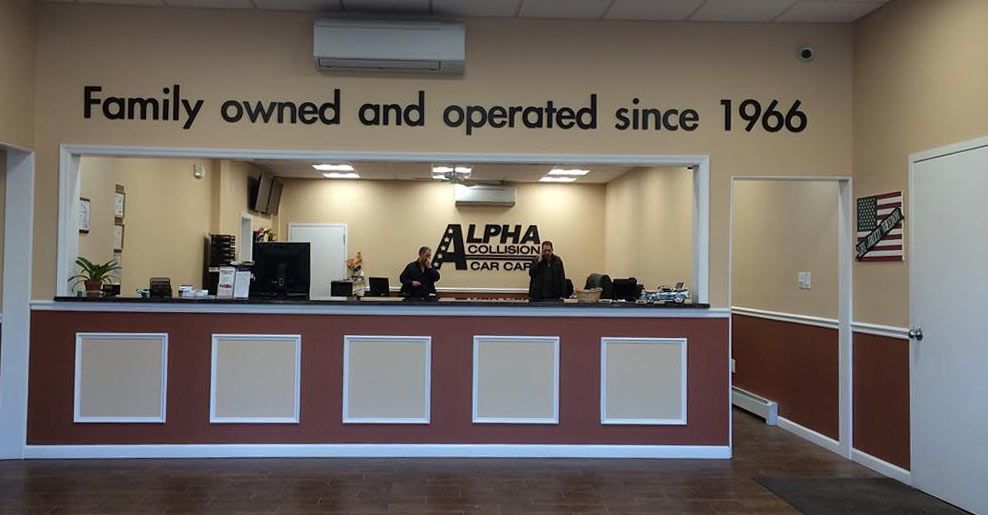
Alpha Collision and Car Care has operated out of Garden City Park since 1966. It is a family-owned business where body work, paint, glass, frame repair, and full mechanical service including transmission work all happen under the same roof. If your vehicle needs more than just a transmission fix - say, body damage that happened to coincide with a mechanical breakdown, or a lease return situation where multiple repairs need to happen at once - you are dealing with one place and one phone call rather than coordinating between multiple shops.
The shop works with all insurance companies, including when a transmission issue or related damage involves an insurance claim.
The shop is located at 79 Herricks Rd. in Garden City Park and serves drivers across Nassau County and Long Island.
If you are noticing any of the signs described in this article - RPM spikes without matching acceleration, rough or delayed shifting, strange noises, fluid under the car, or a burning smell - the right move is to stop driving and get a diagnostic. Call or text Alpha Collision and Car Care at (516) 294-0852 to schedule an inspection or arrange towing. Getting a clear diagnosis is the first concrete step toward knowing what you are dealing with and what it will take to fix it.
SHARE THIS POST:
Author:
Alpha Collision & Car Care
Alpha Collision & Car Care provides expert auto repair, collision restoration, and maintenance services to keep your vehicle running smoothly and looking its best. With precision, quality, and customer satisfaction, we ensure your car is safe, reliable, and road-ready.
Get in touch
We're Ready To Assist You Anytime
Blog - Website Form
Search an article
Blog
Recent Articles


GET HELP WITH YOUR INSURANCE CLAIM
Reporting an insurance claim can be a major inconvenience. Call Alpha, we can make your insurance claim seamless.
Sign Up For Updates
Sign Up Now & Enjoy 10% Off Your First Service
Sign up today and receive
10% off your first service! Experience expert auto care with quality repairs and maintenance.